The report tracks heart failure and structural heart care across 47 U.S. health systems, 830 facilities, and more than 15.7 million de-identified patients. Read a summary of our findings below or request the full report.
Get the full report
Key Findings
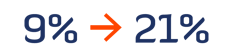
Four-class GDMT prescribing in systolic HF
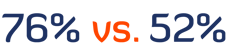
3-year survival among patients prescribed 4 GDMT classes vs. none
Systolic HF patients prescribed zero GDMT at the average health system
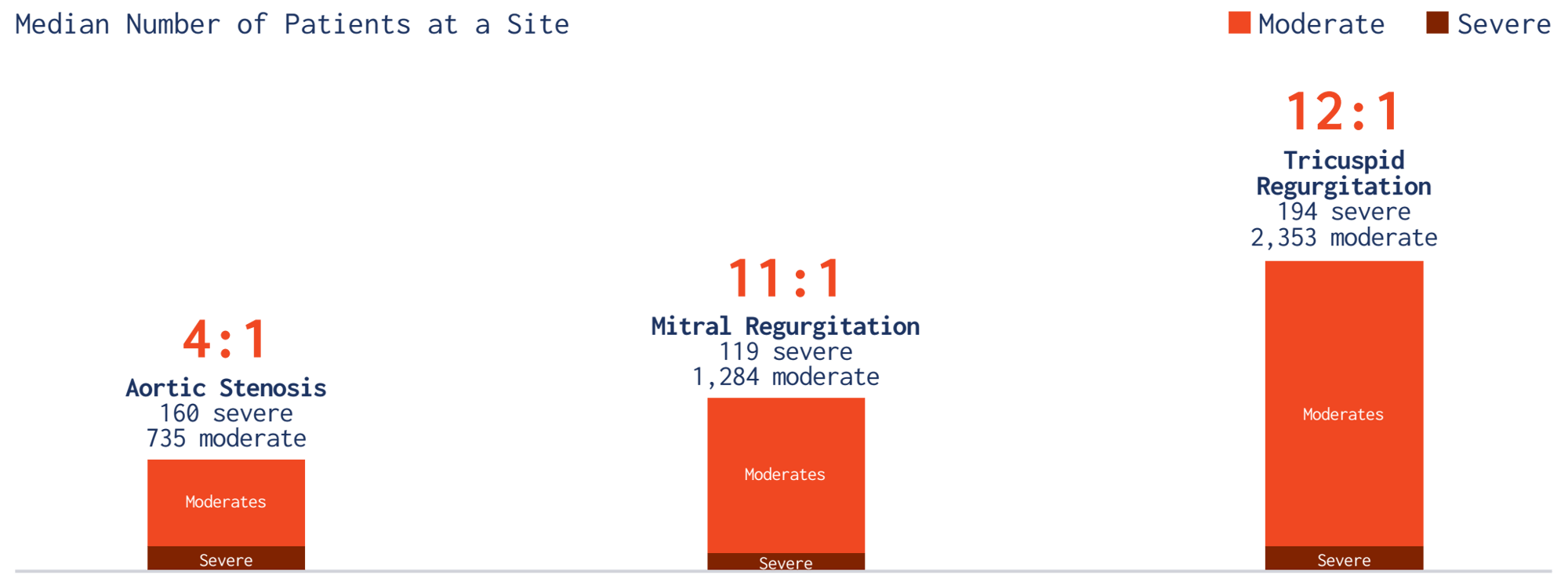
Four untreated moderate AS patients for every severe one
Heart Failure
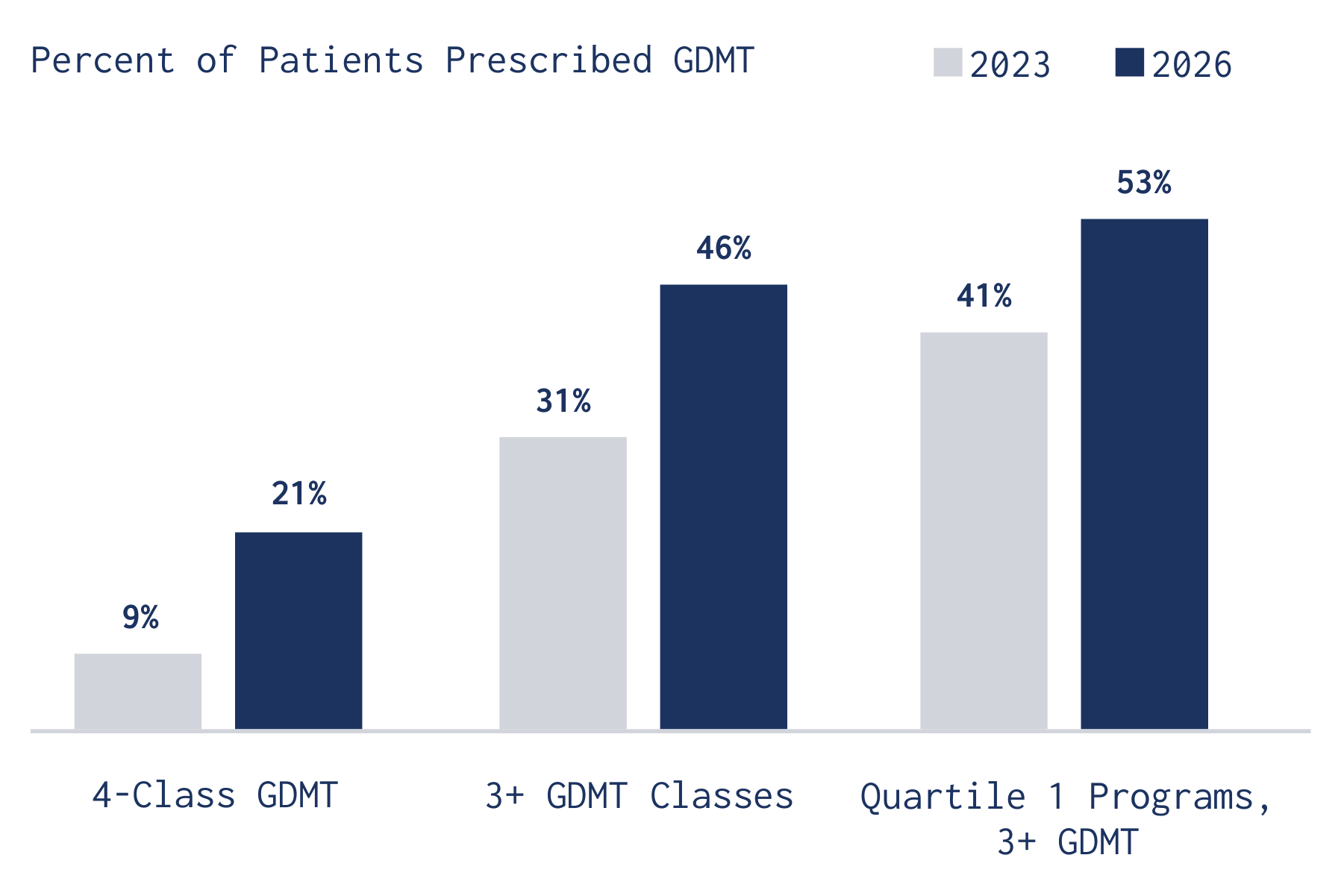
egnite’s data shows that prescribing of all four guideline-directed medical therapy (GDMT) classes for systolic heart failure rose from 9% to 21% since the 2023 report, and prescribing of three or more classes rose from 31% to 46%. The growth is consistent with rapid adoption of SGLT2 inhibitors.
New analysis of more than 650,000 real-world systolic heart failure patients featured in the report reveals a strong association between three-year survival and the number of GDMT classes prescribed. Three-year survival was 76% among patients prescribed four classes, compared with 52% among patients prescribed none, a difference of 24 percentage points.
The 2026 egnite Benchmark Report shows how heart failure care is delivered in practice, and where significant gaps remain.
Structural Heart
The report also finds a large untreated moderate valve disease population. At the median site, there are 4 untreated moderate aortic stenosis, 11 untreated moderate mitral regurgitation, and 12 untreated moderate tricuspid regurgitation patients for every untreated severe patient.
Only 7% of eligible patients with symptomatic severe TR received treatment, up from 6% in 2023, despite two FDA approvals for transcatheter TR therapies in 2024.
Quotes
“In 2023, fewer than 10% of heart failure with reduced ejection fraction (HFrEF) patients were prescribed all four classes of guideline-directed medical therapy. Today, that figure has more than doubled to 21%--an encouraging sign of how rapidly clinical practice can evolve. Yet most patients remain untreated, with egnite data revealing substantial variation in prescribing practices across providers and institutions.”
Dr. Rahul Sharma, MBBS, FRACP
Director of Structural Interventions and Associate Director of the Cardiac Catheterization Laboratory at Stanford Health Care, and Senior Medical Advisor of egnite
"In heart failure, data is your friend. CardioCare gives us benchmarking data and helps identify patients for outreach – allowing us to proactively manage this large population."
Lauren Lindner, MSN, MPH, AGNP-BC
Heart Failure Clinic Nurse Practitioner for St. Luke’s
“At the Transcatheter Cardiovascular Therapeutics (TCT) 2026 conference, I’ll share new real-world data from the large egnite Registry on the prevalence of moderate AS compared to severe AS, on the proportion of patients with at least one at-risk feature, and their prognosis over time. The future of aortic stenosis care management requires proactive patient identification, longitudinal monitoring, and active management.”
Dr. Philippe Généreux
Director, Structural Heart Disease Program, Morristown Medical Center; Medical Advisory Board, egnite
About the Data
The 2026 Benchmark Report draws on the egnite Registry, a de-identified and longitudinal patient database derived from unified data used daily in patient care. The analysis includes integrated EMR and echocardiographic data from 47 teaching and non-teaching institutions with appropriate permissions for patients echoed or diagnosed between January 1, 2020, and May 31, 2026. Valve disease severity was extracted from echocardiography reports using egnite’s proprietary natural language processing, validated at greater than 99% accuracy on 8,000 randomly sampled reports. Findings are observational. The 2023 report reflected 24 health systems; comparisons between the two reports are directional trends in the national benchmark rather than a matched same-site panel. Metric definitions are unchanged between reports.
The CardioCare platform is not intended for use in the diagnosis, cure, mitigation, treatment, or prevention of cardiovascular diseases.